The integrated model
The systems are designed to reinforce one another.
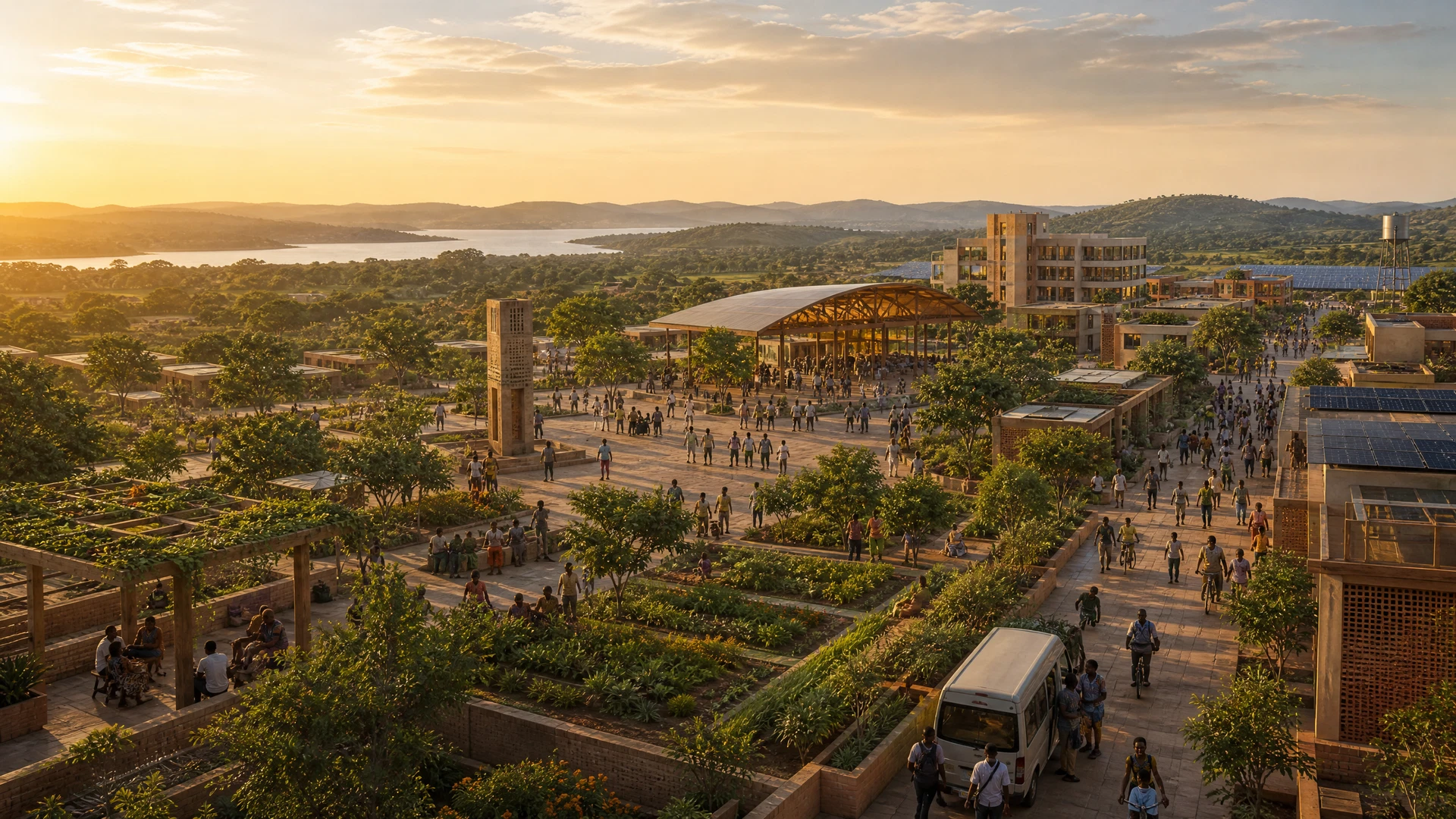
The vision begins with grounded land stewardship and expands through productive systems, local enterprise, shared capability, practical services, and intergenerational care. Each relationship below is a planning model—not a claim that every element is already built.
Land stewardship
A pathway toward cooperative, documented stewardship that supports long-term community decision-making rather than short-term extraction.
Development logic
From soil to services, without breaking the chain.
This is the relationship the full ecosystem is intended to support as planning matures.
A clearer comparison
Why this model is different
Not a land purchase narrative
A development system that links stewardship, governance, production, learning, and accountable participation.
Not a luxury enclave
A proposed community model centered on shared infrastructure, practical services, and broad-based capability.
Not a collection of isolated projects
Connected systems designed to reinforce one another across land, food, work, culture, and future generations.
Not hype about finished infrastructure
A public process that labels confirmed work, development activity, proposals, and due diligence clearly.