
Regenerative Agriculture Basics
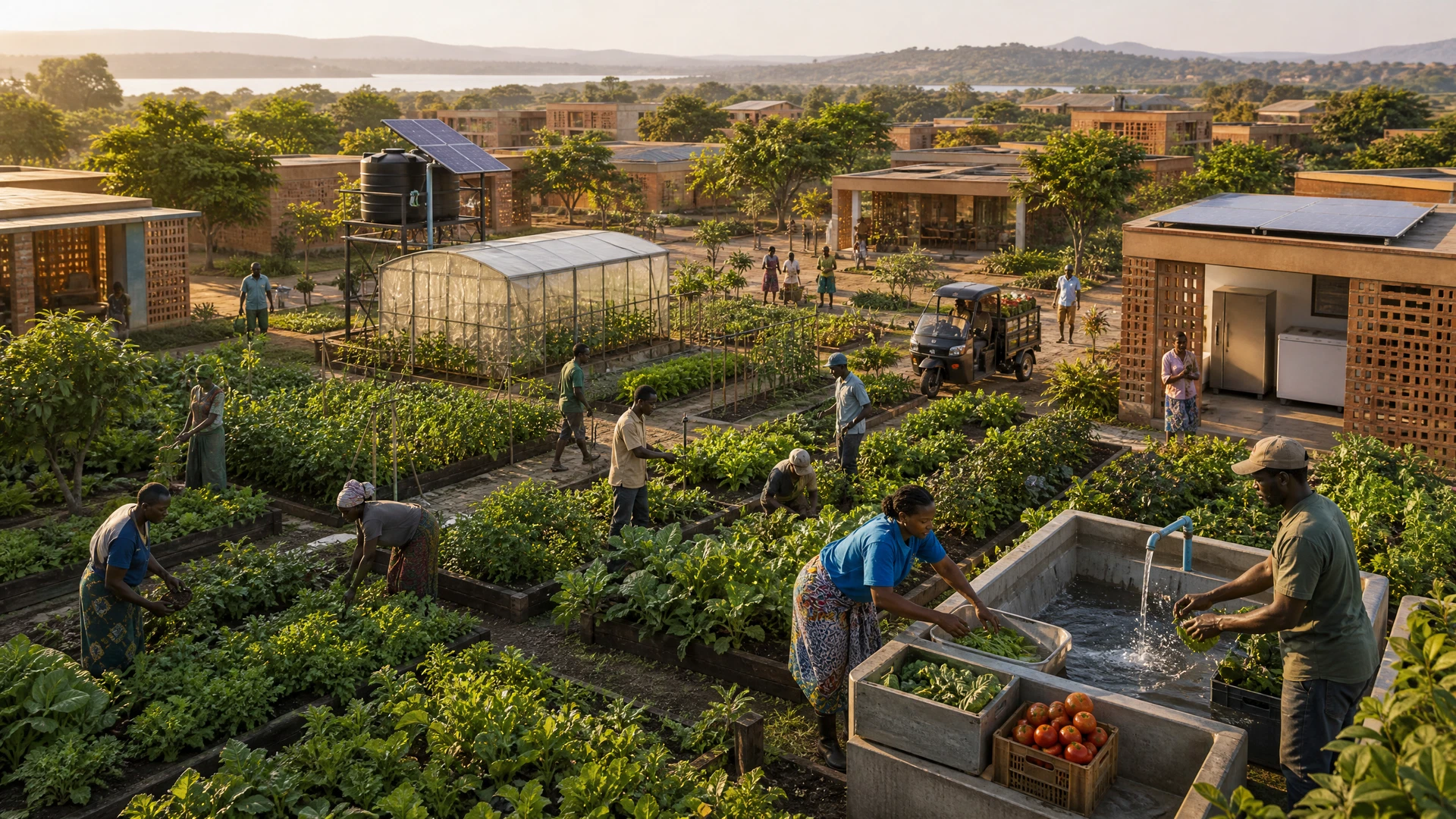
Soil-first farming that heals land while feeding people — the productive engine of every Sovereign Soil site.
Multimodal learning
Listen to Story
Read, listen, or move between both. Narration never starts automatically, and the written lesson remains available throughout.
Narration support unavailable
This browser does not currently expose a read-aloud voice. You can still use the complete written lesson, and a human-recorded narration option can be added when available.
A community cannot be sovereign if it cannot feed itself.
Homes, schools, clinics, studios, and businesses all matter. But beneath every functioning community is a more basic question:
Can the land continue producing food without being exhausted?
Regenerative agriculture begins with the understanding that soil is not an inert surface where crops happen to grow. Healthy soil is a living system. It contains microorganisms, fungi, insects, organic matter, minerals, air, and water—all interacting beneath our feet.
When that system is protected, farms can become more productive, resilient, and efficient over time.
When it is repeatedly disturbed, left bare, compacted, contaminated, or stripped of organic matter, productivity declines. Farmers may become increasingly dependent on expensive fertilizers, pesticides, irrigation, and imported inputs just to maintain the same harvest.
Regenerative agriculture seeks to reverse that pattern.
Instead of asking only, “How much can we harvest this season?” it also asks:
What condition will the soil be in when the season is over?
For Sovereign Soil, this is not simply an environmental preference. It is a long-term food-security strategy.
Regeneration is more than sustainability
The word sustainable is often used to describe systems that can continue without causing severe damage.
Regeneration goes further.
A regenerative system is designed to actively improve the land it uses. It seeks to rebuild soil organic matter, increase biodiversity, strengthen water retention, reduce erosion, and restore ecological relationships.
The goal is not merely to do less harm.
The goal is to leave the land healthier than it was before.
That distinction matters because many agricultural areas are already dealing with depleted soil, declining fertility, erosion, drought pressure, flooding, deforestation, or chemical overuse. Maintaining a damaged system is not enough. Restoration must become part of production.
A regenerative farm should produce food while also rebuilding the natural foundation that makes future food production possible.
The soil comes first
Healthy plants begin with healthy soil.
Industrial farming often treats soil primarily as a medium for holding plant roots while nutrients are supplied from outside. Regenerative farming treats soil as a living partner.
Healthy soil supports crops by:
- Holding water longer
- Circulating nutrients
- Supporting beneficial microorganisms
- Allowing roots to grow deeply
- Reducing erosion
- Improving resistance to drought and heavy rainfall
- Helping suppress certain pests and diseases
- Storing carbon in organic matter
This does not mean regenerative farmers never use external inputs. It means those inputs should support the biological system rather than replace it entirely.
The objective is to reduce dependency over time by strengthening the land’s own productive capacity.
Principle one: keep the soil covered
Bare soil is vulnerable soil.
When exposed directly to intense sun, soil can dry out quickly and lose biological activity near the surface. Heavy rain can strike bare ground, break apart soil structure, and wash fertile topsoil away. Wind can remove fine particles. Weeds may rapidly colonize disturbed areas.
Regenerative systems try to keep soil covered through living plants or protective organic materials.
This can include:
- Cover crops
- Mulch
- Crop residues
- Ground-cover plants
- Intercropping
- Agroforestry canopies
Mulch made from leaves, straw, pruned vegetation, or other appropriate organic material can help reduce evaporation, moderate soil temperature, suppress weeds, and gradually add organic matter as it decomposes.
Cover crops can protect fields between major planting seasons while also feeding soil organisms and improving fertility.
The principle is simple:
If the soil is not producing a primary crop, it should still be protected whenever possible.
Principle two: maintain living roots
Plants do more than take nutrients from the soil.
Through their roots, they release compounds that feed microorganisms. In exchange, many soil organisms help plants access nutrients and water. This underground relationship is part of what makes living soil productive.
When fields remain empty for long periods, that biological activity can decline.
Keeping living roots in the ground for as much of the year as possible helps maintain the soil ecosystem. Farmers can do this through crop rotation, cover cropping, perennial plants, mixed planting, or carefully timed succession planting.
In a tropical or subtropical environment, the growing season may allow continuous production in many areas. But continuous planting must still be managed wisely. Growing crops year-round should not mean repeatedly extracting from the soil without replacing organic matter or rotating plant families.
The goal is continuous biological activity—not continuous exhaustion.
Principle three: increase plant diversity
A field containing only one crop may be easier to manage mechanically, but it can also become more vulnerable.
Large monocultures can create ideal conditions for certain pests and diseases. They may repeatedly draw the same nutrients from the same soil depths. They also provide limited habitat for beneficial insects and other organisms.
Plant diversity can make the system more balanced.
Diversity may include:
- Rotating crops by season
- Intercropping compatible plants
- Planting legumes with grains or vegetables
- Integrating herbs and flowering plants
- Maintaining hedgerows
- Using fruit and nut trees
- Creating pollinator habitat
- Combining annual and perennial crops
Different plants perform different functions.
Some fix nitrogen. Some produce large amounts of biomass. Some grow deep roots that help loosen compacted soil and bring minerals upward. Some attract pollinators. Some provide shade or wind protection. Some repel or distract pests.
A regenerative farm is not simply a collection of crops. It is a designed ecosystem.
Principle four: minimize unnecessary disturbance
Tillage can help prepare land, control weeds, or incorporate materials into the soil. But repeated deep tillage can break apart soil structure, disrupt fungal networks, expose organic matter to rapid decomposition, and leave the ground vulnerable to erosion.
Regenerative agriculture therefore encourages minimizing disturbance wherever practical.
This may include:
- Reduced tillage
- No-till planting
- Shallow cultivation
- Permanent growing beds
- Controlled traffic paths
- Manual or targeted weed management
- Mulching instead of repeatedly turning the soil
The correct approach depends on the crop, climate, equipment, soil type, and current condition of the land.
Low-till or no-till methods are not magical solutions. Poorly managed no-till systems can still become compacted or weed-filled. The principle is not “never touch the soil.”
The principle is:
Disturb the soil only as much as necessary, and always consider what is being disrupted.
Principle five: integrate animals thoughtfully
Animals can play a valuable role in regenerative systems.
Managed properly, livestock can cycle nutrients, control vegetation, produce manure, support farm income, and convert materials people cannot eat into useful products.
But unmanaged animals can also compact soil, overgraze land, destroy crops, pollute waterways, and spread disease.
The difference is management.
Thoughtful integration may include:
- Rotational grazing
- Chickens following crop harvests
- Manure composting
- Ducks in suitable rice systems
- Small ruminants managing selected vegetation
- Fish integrated into appropriate water systems
- Apiaries supporting pollination
Animals should be matched to the land’s carrying capacity. Their movement, waste, feed, water use, shelter, and health must all be planned.
A regenerative farm does not add animals simply because they are considered “natural.” It integrates them because they serve a defined ecological and productive function.
Compost turns waste into fertility
Organic waste is often treated as a disposal problem.
Regenerative agriculture sees much of it as a fertility resource.
Crop residues, food scraps, leaves, animal manure, and other biodegradable materials can be transformed into compost when properly managed. Compost adds organic matter, improves soil structure, supports biological activity, and returns nutrients to the land.
This creates a cycle:
Food is grown.
Food is processed or consumed.
Organic residues are collected.
Those materials are composted.
The compost returns to the soil.
New food is grown.
This circular approach reduces waste and lowers dependence on imported inputs.
However, compost must be managed correctly. Poorly handled organic waste can attract pests, produce odors, spread pathogens, contaminate water, or release unnecessary greenhouse gases.
The solution is not simply piling waste somewhere behind the farm. Composting requires the right balance of materials, moisture, oxygen, temperature, and time.
Water must be treated as a system
Water is one of the most important limits on agriculture.
A regenerative farm should not think only about irrigation. It should think about how water moves across the entire landscape.
Where does rain fall?
Where does it collect?
Where does it run off?
Where does erosion begin?
How quickly does the soil absorb water?
What areas remain wet too long?
Which crops need the most water?
Which crops can tolerate dry periods?
Regenerative water planning may include:
- Rainwater harvesting
- Contour planting
- Swales where appropriate
- Mulching
- Drip irrigation
- Soil organic matter improvement
- Farm ponds
- Windbreaks
- Shade systems
- Protected waterways
- Drought-tolerant crops
Healthy soil is itself a water-management tool.
Soil rich in organic matter can generally absorb and retain more water than degraded, compacted soil. That can help crops survive longer between rains while reducing runoff during storms.
The most efficient irrigation system will still struggle if the soil cannot hold what it receives.
Agroforestry combines trees and agriculture
Trees can be productive farm infrastructure.
They can provide fruit, nuts, timber, medicine, animal fodder, shade, wind protection, habitat, mulch material, and improved microclimates.
Agroforestry intentionally integrates trees with crops or animals.
Examples may include:
- Fruit trees above shade-tolerant crops
- Windbreaks around fields
- Alley cropping
- Living fences
- Trees planted along waterways
- Silvopasture
- Home gardens with multiple canopy levels
Tree selection must be careful.
Some trees compete aggressively with crops for water or light. Some have invasive roots. Others may host pests or become difficult to manage. Trees should be selected according to climate, soil, crop needs, community use, and long-term maintenance.
Well-designed agroforestry can make a farm more diverse and resilient. Poorly designed tree planting can create new problems.
Regeneration requires design, not just good intentions.
Regenerative agriculture must also be economically viable
A farm cannot protect the soil for long if it cannot support the people doing the work.
Regenerative practices must therefore be connected to a realistic economic system.
That includes:
- Reliable markets
- Fair pricing
- Storage
- Processing
- Transportation
- Equipment
- Labor planning
- Access to seeds and tools
- Crop insurance or emergency reserves
- Farmer training
- Financial record-keeping
- Value-added production
Some regenerative practices may reduce costs over time. Others may require significant investment at the beginning.
Soil restoration can take years. Tree crops may not produce immediately. New methods may require training. Transition periods may temporarily reduce yields in some fields.
This is why community-scale planning matters.
A Sovereign Soil agricultural system should not ask individual farmers to carry all transition risk alone. Shared equipment, cooperative purchasing, training, processing, storage, transportation, and guaranteed buyers can help make regenerative production financially practical.
Indigenous and local knowledge must be respected
Regenerative agriculture is sometimes presented as a new discovery.
It is not.
Many Indigenous and traditional farming systems have long used crop diversity, fallowing, composting, agroforestry, seed preservation, mixed farming, water harvesting, and landscape observation.
Modern regenerative agriculture often brings scientific measurement and new terminology to principles that local farmers may already understand through generations of practice.
Sovereign Soil should not arrive assuming that diaspora participants have come to teach Africans how to farm.
The correct approach is partnership.
Local farmers understand rainfall patterns, soil behavior, crop timing, pests, cultural preferences, and market realities in ways outsiders may not. Agronomists and soil scientists can contribute testing, research, and technical support. Diaspora participants may contribute capital, equipment, processing systems, logistics, or new market connections.
The strongest system combines knowledge rather than dismissing it.
Farming for nutrition, not just volume
A successful farm should not be judged only by the number of tons harvested.
It should also be judged by what those crops do for the people eating them.
A community food system should support diverse nutrition through vegetables, fruits, legumes, grains, roots, herbs, healthy fats, and appropriate animal products where included.
High-volume production of one commodity may generate income, but it does not automatically create food security.
A regenerative farm plan should balance:
- Community consumption
- Local market sales
- Institutional supply
- Processing
- Storage
- Seed production
- Export opportunities
The clinic, school, market, food-processing center, and farms should be connected.
Children should be able to eat food grown within the system. Clinics should have access to nutritious local foods. Farmers should have dependable buyers. Food waste should return to composting or other appropriate uses.
That is how agriculture becomes community infrastructure.
Measurement matters
A farm should not be called regenerative simply because it uses natural-looking methods.
Progress should be measured.
Useful indicators may include:
- Soil organic matter
- Soil structure
- Water infiltration
- Erosion levels
- Crop yields
- Input costs
- Biodiversity
- Pollinator activity
- Ground cover
- Farmer income
- Water consumption
- Nutrient density
- Pest pressure
Some improvements may be visible. Others require soil testing, record-keeping, and long-term observation.
Without measurement, the word regenerative can become a marketing label rather than a real practice.
Sovereign Soil should be able to show what is improving, where methods are failing, and what must be adjusted.
The farm is the productive engine
Regenerative agriculture is not a decorative garden added to the edge of the community.
It is one of the community’s productive engines.
It feeds people.
It creates work.
It supplies schools and clinics.
It supports processing and manufacturing.
It reduces dependence on imported food.
It creates products for local and international markets.
It restores land.
It builds skills.
It strengthens resilience.
Most importantly, it connects sovereignty to something real.
A community that cannot feed itself remains vulnerable to price shocks, supply-chain disruptions, political instability, and outside dependency. A community that restores its land while building a reliable food system gains a different kind of strength.
Regenerative agriculture teaches us that production and restoration do not have to be enemies.
We do not have to choose between feeding people and protecting the soil.
Done properly, each can strengthen the other.
Feed the people. Restore the land. Protect the future.
That is the foundation of regenerative agriculture—and one of the foundations of Sovereign Soil.
This article is educational and does not replace location-specific advice from agronomists, soil scientists, environmental professionals, experienced farmers, or agricultural authorities.
Learning pathway
More ways to explore this lesson
Sovereign Soil Academy is developing each lesson as a multimodal learning experience. These additions will appear only when reviewed, source-backed material is ready; the current written lesson remains the reference on this page.
Vocabulary
Key terms and plain-language definitions
Pronunciation
Guidance for names, places, and terms
Context & map
Source-backed geographic and historical context
Timeline & sources
Reviewed chronology and primary references
Discuss & check
Discussion prompts and knowledge checks
Teacher notes
Facilitation guidance and related lessons